


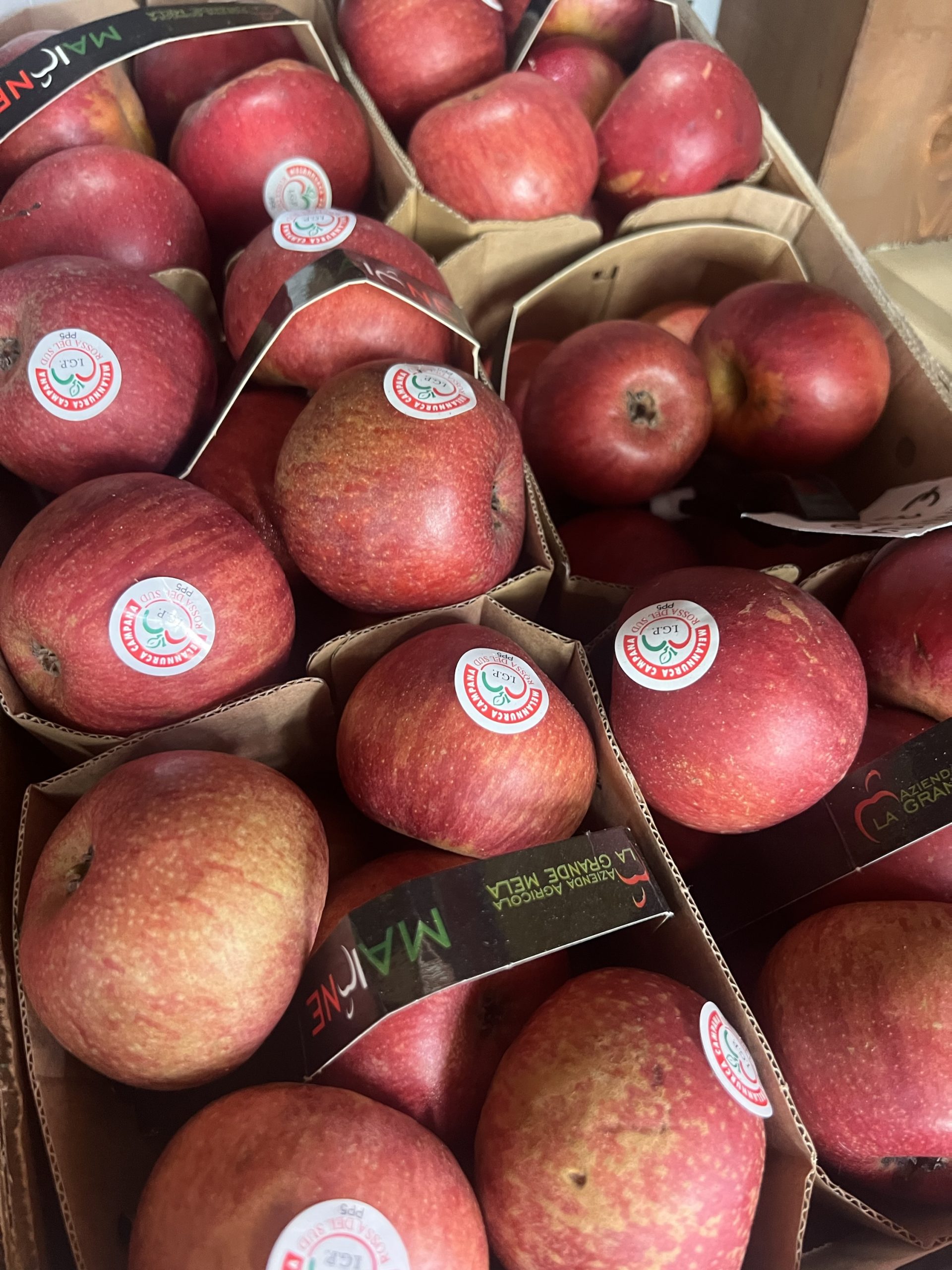
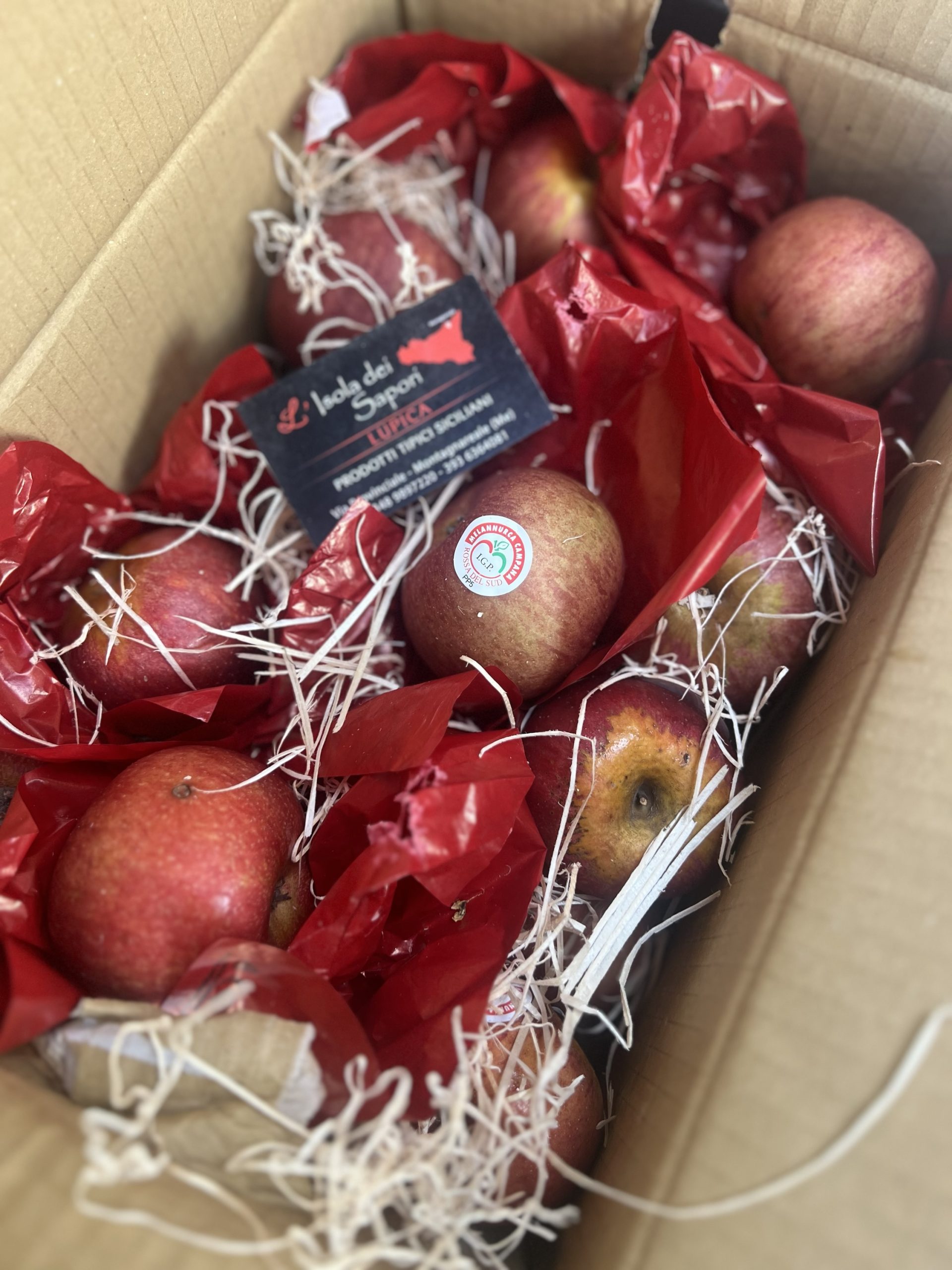
MELA ANNURCA CAMPANA I.G.P. Original price was: 4,50 €.3,99 €Current price is: 3,99 €.
mela annurca campana i.g.p.
It is effective against high cholesterol levels (it reduces total cholesterol by about 30% and, at the same time, increases cholesterol levels in the ...
Out of stock
Description
La melannurca o bell annurca apple is an Italian fruit and vegetable product that designates a valuable variety of apple typical of the region Campania.
Harvesting of these fruits, which are still unripe, must begin around mid-September in order to prevent them from rotting as they fall to the ground. Immediately afterwards, the ripening phase, known as 'blushing', begins, with exposure to the sun for 10-15 days.
The apples are placed on the ground on 'melai', or 'pòrche', which are strips of soil covered with mats of straw derived from the threshing[1] and delimited by furrows to let the water run off. They are frequently turned by hand until they reach their typical colour. This last operation is mainly carried out by women[2].
Etymology and history
Melannurca has been present in Campania since the pre-Roman age of the Italics Osci e Samnites. Some paintings found in the excavations of Pompeii and of Herculaneumparticularly in the Deer Housetestify to its close connection with the later Roman world in the context of the Campania Felix[3].
Place of origin would be the territory of Pozzuolithe ancient Puteolias reported by Pliny the Elder (1st century AD) in his treatise: Naturalis historiaunder the name of Mala Orcula in relation to the neighbouring Orci.e. the Lake Avernushome of the Underworld. According to another hypothesis, the name is derived from the Latin verb indulcō (sweeten) referring to the aforementioned method of maturation. However, it is the common Fourth the region's leader in production.
In 1583 Giovanni Battista Della Porta (1535-1615) in the opera Pomariumdescribing the fruit produced in the Puteolian countryside, states that: "... the apples from Varro, Columella e Macrobium are called orbiculàte, they come from Pozzuoli, have a red skin, so as to appear stained in blood and are sweet in taste, vulgarly they are called Orcole'. In later centuries, the names of Anòrcola e Annòrcola while the current name 'Annurca' is present in the Breve ragguaglio dell'agricoltura e pastorizia del regno di Napoli di qua' del faro by Guglielmo Gasparrini (1845), in the Productive forces in the province of Naples by Alessandro Betocchi (1874), and in the Manual of Arboriculture by Giuseppe Antonio Pasquale (1876).
The Melannurca at risk of extinction
The Melannurca Campana risked theextinction in the decades following the World War II. Widely consumed before the war period, during the 1960s was gradually replaced by a variety from the United States of Americalarger and better from an aesthetic point of view. For the last twenty years or so, there has been a widespread revival of this activity.
The case of Melannurca 'disguised' as Sicilian
L'cholera epidemic that struck Naples in August 1973 led to the Melannurca Campana crisis, despite theWorld Health Organisation declared the city out of danger the following October. For fear of contagion, large consignments remained unsold in the fruit and vegetable markets of the Neapolitan suburbs and in the cold store in Mugnano di Napoli[4]. This serious situation led some traders to ingeniously use vehicles and hauliers from the Sicilyin particular by Palermothus managing to dispose of that year's production.
Melannurca and the Regi Lagni flooding
A series of heavy rainfall caused in Mugnano di Napoli, in the 1975, l'flooding of the "Lagno"along which there were vast expanses of Melannurche. The strong currents of water mixed with mud transported the apples all the way to the historic centre causing considerable economic damage.
Acknowledgements
In March 2006, at European level, the 'Melannurca Campana' designation was recognised as Protected Geographical Indication (PGI)[5].
Registration
The Protected Geographical Indication 'Melannurca Campana' was recognised, pursuant to EC Regulation No 2081/92, by Regulation (EC) No 417/2006 (published in OJ No L 72 of 11 March 2006). Entry in the National Register of Protected Designations of Origin and Protected Geographical Indications took place by ministerial order of 30.03.06, published in the Official Gazette of the Italian Republic No. 82 of 7.04.04, together with the Product Specification and Summary Sheet (already published in the Official Journal of the European Community together with the aforementioned Register 417/06)[6].



Reviews
There are no reviews yet.